
Industrial transport is a specialized logistics service designed to move machinery, heavy equipment, and large-volume goods that require specific technical means. This type of transport is essential for sectors such as construction, manufacturing, energy, and engineering, where the safe and efficient movement of industrial equipment is a key part of projects.
Unlike conventional transport, industrial transport involves technical planning, specialized vehicles and qualified personnel to ensure that each transfer is carried out safely, efficiently and in compliance with regulations.
What is industrial transport?
Industrial transport consists of the movement of heavy machinery, metal structures, industrial equipment or large components that, due to their size or weight, cannot be transported by standard logistical means.
This service may include the movement of:
- Industrial machinery
- Production equipment
- Metal structures
- Transformers and generators
- Industrial tanks and silos
The main objective is to ensure that these items arrive at their destination undamaged and within the established deadlines.
Characteristics
Industrial transport has a number of characteristics that differentiate it from other logistics services.
- Specialized vehicles
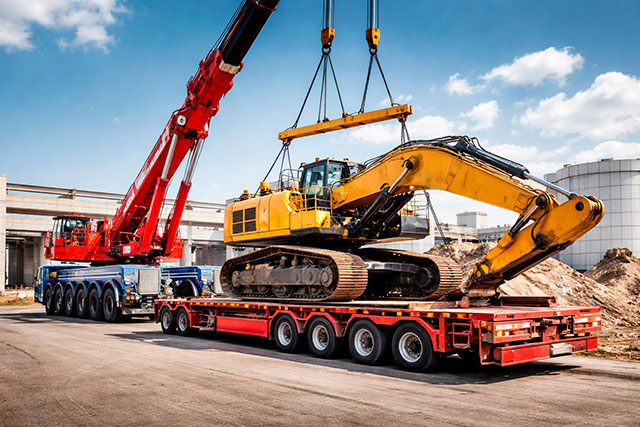
Special platforms, crane trucks, high-capacity gondolas, or modular vehicles designed to withstand large loads and dimensions are used.
- Advanced Logistics Planning
Before carrying out the move, it is necessary to analyze routes, weight limitations, bridge heights, and traffic restrictions. This allows for optimizing the route and avoiding problems during transport.
- Technical handling of loads
Many industrial parts require specific lifting equipment, cranes, or loading systems for safe handling.
- Regulatory compliance
Transporting heavy machinery usually requires special permits, escorts, or administrative authorizations according to current transport regulations.
Sectors that use industrial transport
Among the most common are:
Manufacturing industry:
Factories need to move machinery, production lines, or industrial equipment between plants or logistics centers.
Construction and engineering:
The transport of metal structures, prefabricated elements, or construction machinery is common in large construction projects.
Energy sector
Equipment such as transformers, turbines or generators require specialized industrial transport solutions.
Logistics of industrial projects
Large industrial projects often involve the coordinated transport of multiple pieces of equipment and components.
Advantages of having a specialized company
Hiring a company specializing in industrial transport offers numerous advantages for companies that need to move complex loads.
Safety in transport
Specialized companies have technical personnel and equipment suitable for handling heavy loads without risks.
Time optimization:
Proper logistics planning reduces delays and allows you to meet project deadlines.
Reduction of operational risks:
Technical knowledge and experience in industrial transport minimize potential problems during relocation.
Comprehensive solutions
Many companies offer complementary services such as loading and unloading, crane transport or door-to-door logistics.
The role of industrial transport in modern logistics
Industrial transport has become a key element in modern logistics. As industrial projects increase in complexity and size, the need for specialized transport solutions also grows.
Companies that have a specialized logistics provider can guarantee the continuity of their operations, optimize costs, and ensure that their industrial equipment is transported efficiently and safely.
In an increasingly competitive industrial environment, having professional industrial transport services is a strategic factor for the success of any project.
For more information you can contact us.
Leave A Comment